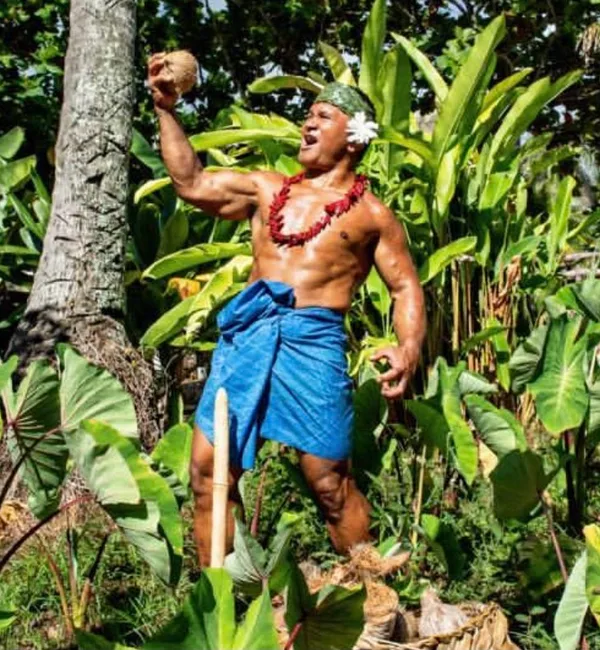
Meet Kap Te'o Tafiti
I'm Kap Te'o Tafiti, a South Pacific traditional skills specialist born and raised in the island world I now teach people to understand. Most folks in Hawaii know me from my work as Senior Cultural Ambassador at the Polynesian Cultural Center, where I've spent years educating and entertaining millions of visitors — but my real passion has always been getting people out of the audience and into the forest, the ocean, and the earth itself.
I'm widely recognized as one of the foremost traditional island survival specialists in the South Pacific, and I've had the privilege of bringing those skills to some unexpected places — including working alongside Dwayne 'The Rock' Johnson on the set of Hobbs and Shaw right here on Oahu.
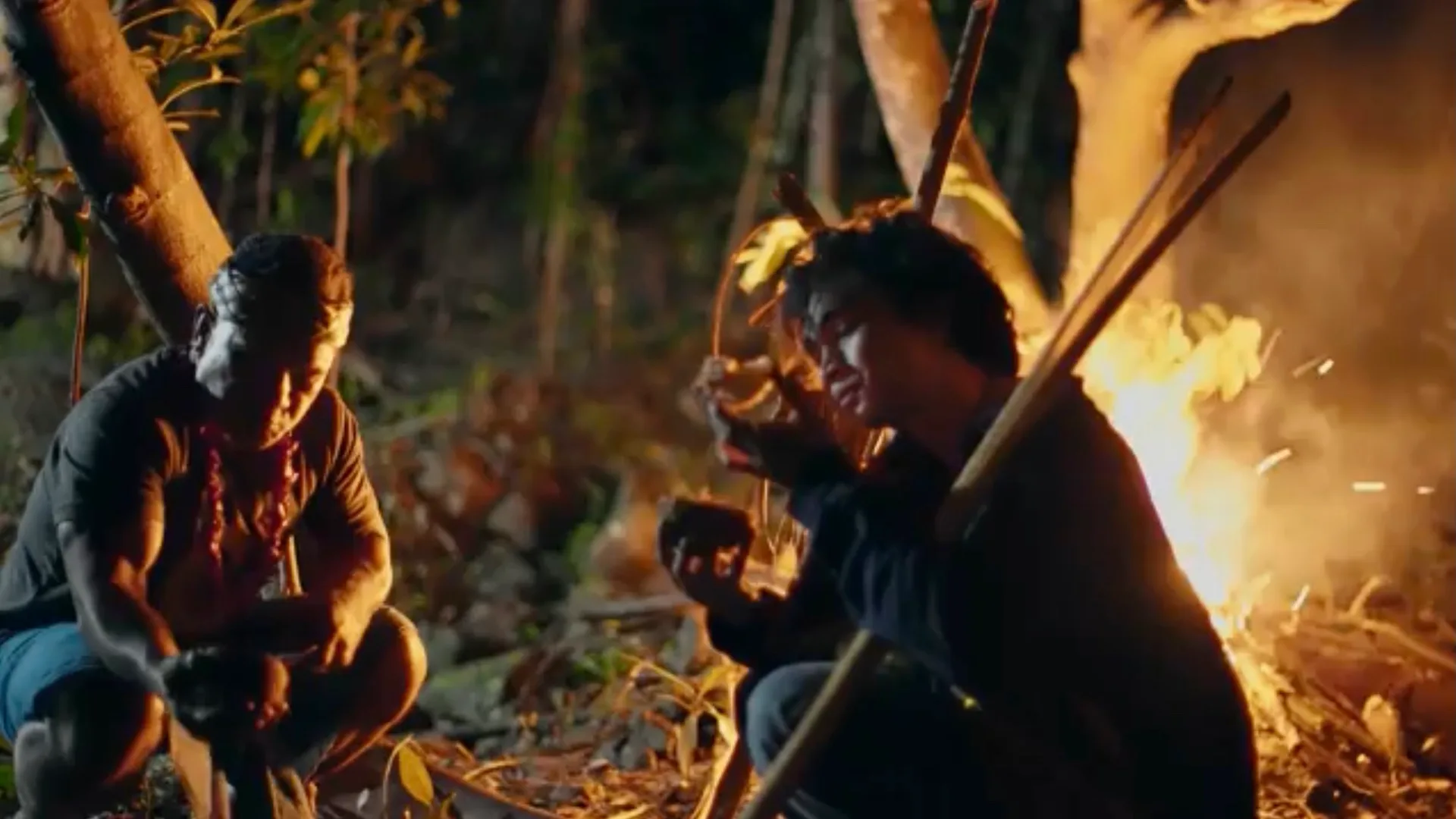
Fire-making, wild foods, traditional cooking, fire-knife dancing — these aren't performance pieces to me. They're living knowledge passed down through generations of island people who understood exactly how to survive and thrive in one of the most remote places on earth. I started Hawaii Survival School because that knowledge deserves to be shared, not preserved behind glass. Whether you're a local who wants to reconnect with your roots or a visitor who wants to understand these islands beyond the resort, I built this school for you.
Meet the Instructors
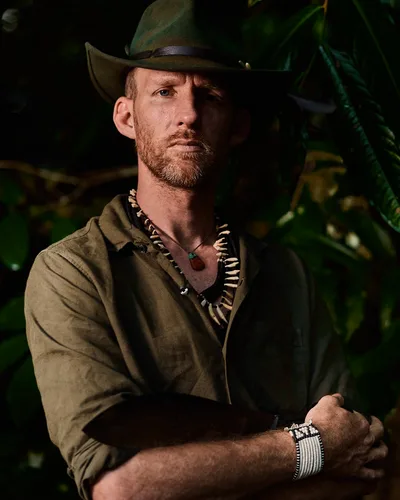
Dan Baird
Dan is a veteran wilderness survival instructor whose field experience spans some of the world's most demanding environments. He brings deep practical expertise to every Hawaii Survival School program — from primitive fire techniques to wilderness first aid — with a teaching style that makes complex skills accessible to all ages and experience levels.
Why We Started Hawaii Survival School
Oahu sits more than 2,000 miles from the nearest habitable land. The people who first settled these islands didn't have supply chains or search-and-rescue helicopters — they had deep, practical knowledge of the land, the ocean, and the plants around them. That knowledge kept entire communities alive for centuries, and most of it still works just as well today. We started Hawaii Survival School because too many people — visitors and locals alike — head into Hawaii's wilderness without any real understanding of where they are or what to do if things go sideways. We wanted to change that, and we wanted to do it in a way that honors the culture these skills come from, not just treats them as a novelty.
Survival Skills & Traditional Island Living Skills
It is important to understand that there is a distinct difference between survival skills used to prepare for and tackle wilderness emergencies, and the traditional skills that Hawaii's Kānaka Maoli (Native Hawaiians) and other Polynesian cultures have used to not only survive but to thrive for over 1,600 years in Hawaii, and thousands of years across all of Polynesia and beyond.
Hawaii Survival School Services
Wilderness Survival Training Courses & Traditional Island Adventures
Hawaii Survival School provides a wide range of survival training and adventure experience options, from single-day family-friendly survival adventures to professional survival training for outdoor professionals. View our regular courses and adventures here. For custom survival training options, visit this page.
Survival Media Consulting & Services
Click here to learn more about why Team HSS is the world's leading expert when it comes to island survival media production.
Emergency Preparedness & Disaster Response
Hawaii Survival School is experienced with providing professional and public training for emergency settings and disaster response. These include options for custom first-aid training, disaster preparedness training, search & rescue training, and more. Click here to inquire about custom training options.
Corporate Team-building & Executive Leadership Training
Hawaii Survival School regularly provides customized island leadership retreats and team-building adventures to leading businesses and organizations from around the world. Team HSS clients include names like Google, Facebook, Microsoft, and Intel. Learn more about private group training.
Military / Tactical Survival Training
Law enforcement, military organizations, and other outdoor professionals often require highly specialized types of outdoor training. Please email Info@HawaiiSurvivalSchool.com to inquire about specialized jungle and island survival training options.
ʻŌlelo Hawaiʻi – The Importance of Language
Integral to learning survival skills and traditional living is language. Language grows organically in its places of origin to carry the knowledge and cultural understanding it needs to within the community it is from. Hawaii Survival School believes strongly in creating learning opportunities that educate using key Hawaiian language and cultural concepts — so that information and concepts that may otherwise be lost in translation are preserved and carried on.
Key Cultural Concepts
'Āina
The land and sea — literally "that which feeds." A word whose meaning runs deeper than any direct translation.
Mālama ʻāina
To care for and protect the land.
Kuleana
Responsibility — a reciprocal relationship between a person and what they are responsible for. Hawaiians have a kuleana to the 'āina, and the 'āina has a kuleana to the people.
Aloha
"The presence of breath" or "the breath of life." Love, peace, compassion, and mutual respect — not just a greeting, but a way of life.
Kokua
To help — representing a spirit of kindness and a desire to support one another without expecting anything in return.
Mana
Sacred spiritual energy of power and strength — a life force that flows through all things and all people.
Course Vocabulary
Your instructors may use these and other ʻŌlelo Hawaiʻi terms throughout your training to enrich the learning experience:
Experiences with the language, traditional living skills, and Aloha of Hawaii await you on every Hawaii Survival School adventure!
Our Values
Respect for Culture
Every skill we teach has a people and a history behind it — we treat traditional island knowledge with the same reverence we'd expect from the communities it came from.
Real-World Readiness
We teach what actually works when things go wrong in the field, not sanitized classroom theory — if we wouldn't rely on it ourselves, we won't teach it to you.
Aloha Over Everything
Aloha isn't a greeting on a sign — it's how we run every class, welcome every student, and treat the land we train on.
Accessible to Everyone
You don't need military experience or a survival background to learn here — we meet people where they are and build from there, whether you're eight years old or eighty.